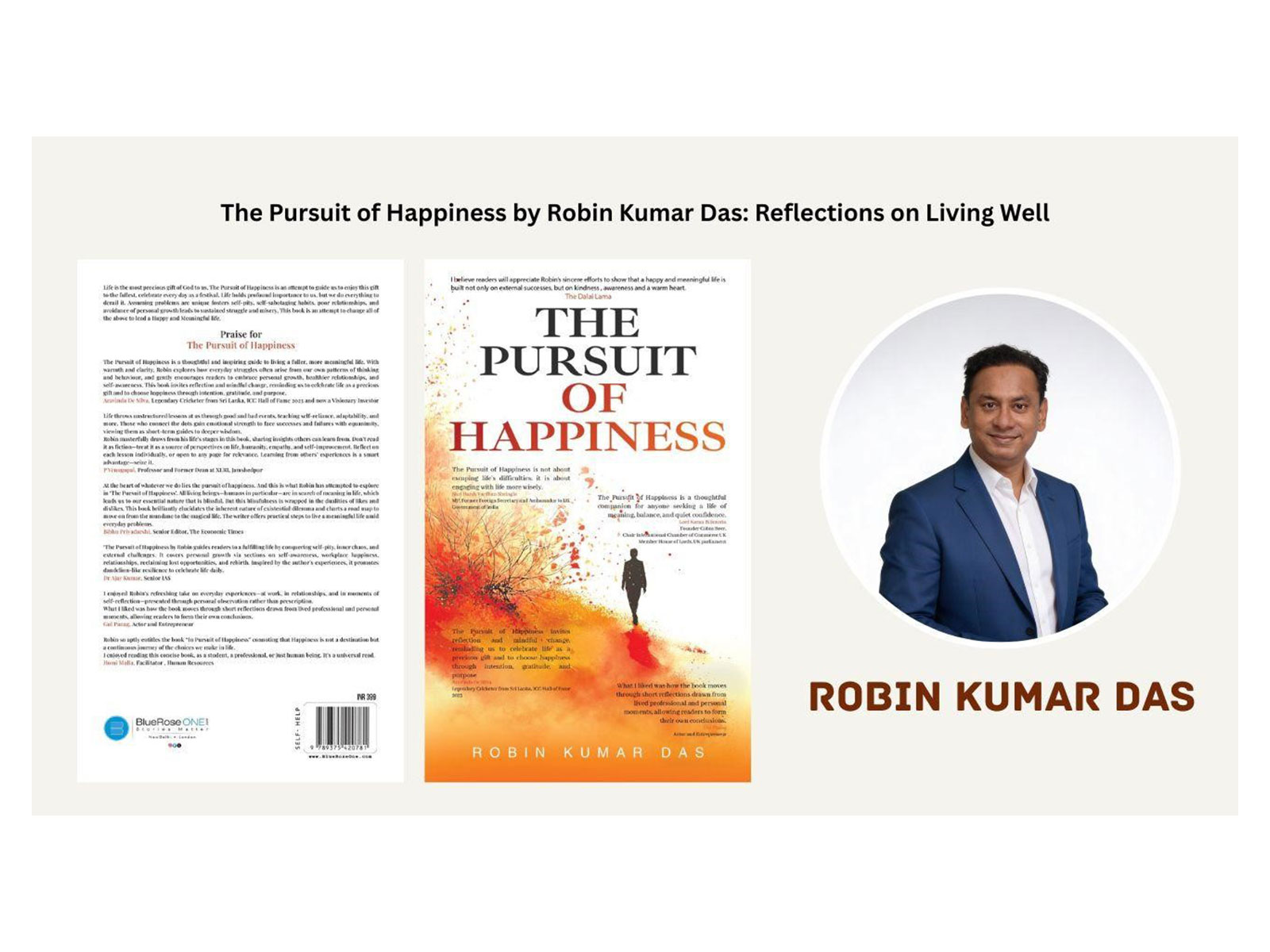
The Pursuit of Happiness by Robin Kumar Das: Reflections on Living Well
Feb 12, 2026
VMPL
New Delhi [India], February 12: In an age defined by relentless ambition, curated success, and constant comparison, happiness has quietly become one of the most misunderstood ideas of modern life. We chase milestones, titles, and approval with impressive clarity, yet often remain uncertain about what truly brings peace and fulfilment. The Pursuit of Happiness by Robin enters this confusion with sincerity and depth, offering not a shortcut to joy but a thoughtful guide to living a happy and meaningful life.
Positioned within the personal development genre, the book is grounded firmly in lived experience rather than abstract theory. Robin Kumar Das, a postgraduate in management from MANAGE, Hyderabad, brings over 23 years of leadership experience in sales and marketing across India and international markets. However, the real strength of the book lies not in professional credentials alone, but in the author's willingness to reflect honestly on his personal and professional journey, including moments of doubt, struggle, learning, and renewal.
At its heart, The Pursuit of Happiness reminds readers that life is the most precious gift and is meant to be lived consciously and celebrated every day. Robin challenges a deeply ingrained assumption that many people carry, namely that their problems are unique. This belief, he explains, often leads to self-pity, isolation, unhealthy coping habits, strained relationships, and avoidance of personal growth. Rather than denying the reality of suffering, the book encourages readers to engage with life more wisely and responsibly.
One of the book's most compelling qualities is its refusal to promise a life free of hardship. As highlighted by Dr Rahul Rai, the book teaches readers to approach life with clarity, calm, and awareness instead of seeking escape from difficulties. Happiness, in this narrative, is not the reward for success or security. It is a state of balance that arises when ambition is guided by values, purpose coexists with responsibility, and inner beliefs align with outward actions.
Deeply rooted in the Indian understanding of life, the book reflects the idea that happiness has never been viewed merely as an end result. Instead, it is seen as a way of being. Robin draws from everyday experiences with family, professional environments, quiet moments of introspection, and even leisure spaces such as the golf course. The golf metaphor, used effectively throughout the book, becomes a lens to examine patience, discipline, focus, humility, resilience, and acceptance. As Dr Ashish Rai observes, these metaphors elevate the book's relatability and allow life lessons to resonate beyond the sport itself.
Relationships form the emotional backbone of The Pursuit of Happiness. The author repeatedly returns to values such as honesty, loyalty, commitment, kindness, and genuine concern for the well-being of others. He emphasises the importance of proactive self-care and aligning one's hidden thoughts with visible actions. Advocate Saikrishna Rajagopal notes how deeply the book resonates with the spiritual teaching of Sri Sathya Sai Baba, who believed that the purpose of human life is to be happy regardless of circumstances.
What distinguishes this book from many contemporary self-help titles is its tone. The writing remains reflective without becoming preachy and hopeful without sounding idealistic. Robin does not position himself as someone who has figured everything out. Instead, he writes as a fellow seeker who is still learning, still choosing, and still striving to live with awareness. Justice Rajive Bhalla highlights this sincerity, pointing out how the author uses simple metaphors such as a flower or a game of golf to explore complex questions about meaning, success, failure, and fulfilment.
Another recurring theme in the book is the power of conscious choice. Happiness, Robin argues, is ultimately a personal decision that must be made repeatedly. Edimon Ginting notes how the author illustrates his choices across different phases of life and shows that one can continually renew oneself by choosing awareness over complacency. This idea of inner rebirth, shaped by resilience and reflection, runs quietly but consistently through the narrative.
The spirit of the book is perhaps best captured in one of its reflective lines: "And when the round ends, let it be said not that you were perfect, but that you played with awareness, effort, humility, and grace." As Shekar N Rajashekaran observes, this sentiment beautifully captures the author's core message. A meaningful life is not about perfection, but about presence, intention, and integrity.
In a world that often confuses achievement with fulfilment, Robin Kumar Das offers something rare. He presents an honest and grounded exploration of what it truly means to live well. The Pursuit of Happiness does not offer quick fixes or dramatic promises. Instead, it invites readers into a thoughtful conversation about balance, kindness, self-awareness, and purpose. For anyone seeking joy that is rooted not in external success but in inner harmony, this book is an inspiring and worthwhile read.
(ADVERTORIAL DISCLAIMER: The above press release has been provided by VMPL. ANI will not be responsible in any way for the content of the same.)